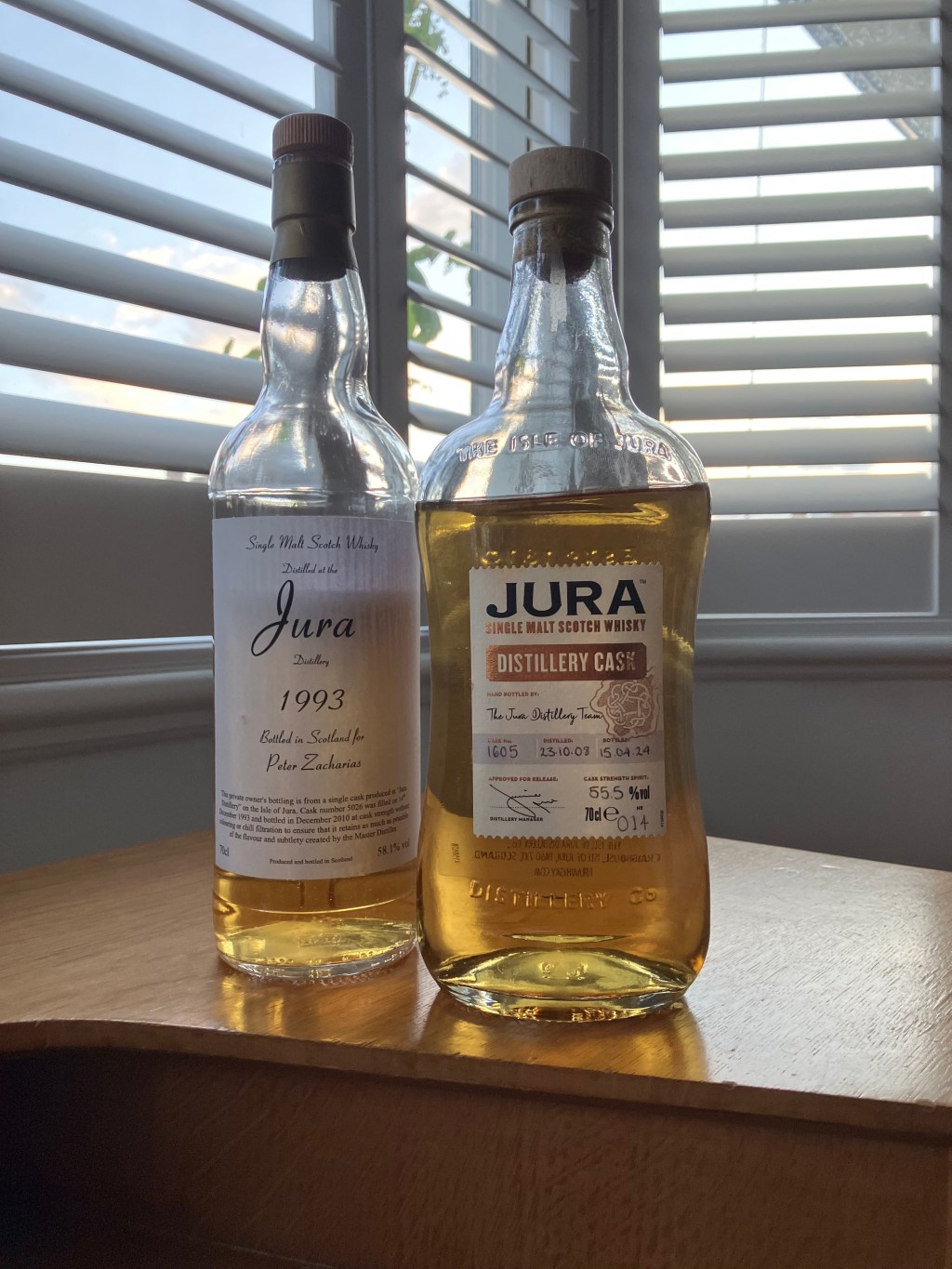
Jura’s an interesting distillery. With some modern whisky fans, the name stands simply for bad whisky, which has always felt incredibly unfair. To be honest, it is one of those opinions that gets flung around towards the end of the tasting. Jura? LOL!
Built in the 60s for supplying malt into blends, it was never designed to be a star – and there are some dreadful 80 and 90s official bottlings to prove that. However, well-aged casks of early 90s Jura have proven that it can be a classic, complex Highland whisky.
In 1993, Whyte and Mackay bought the distillery, completely revamping production towards the end of the 90s. Thus they moved from the previously light and fruity profile to a much heavier distillate with wider cuts, occasionally peated. I’m not sure exactly when this change took place, but in 2002 they were already including peated whisky in their releases, so it must have been 1999 at the latest.
I’m curious to find out whether those changes managed to turn Jura into a single malt drinker’s single malt. Perhaps the 90s style was just different, not worse? Today’s bottles fall into the end of the Invergordon era (1993) and well into modern White and Mackay era (2008). Comparison is also helped by the fact that they are similar ages (15 and 17 years old), and both from bourbon casks.
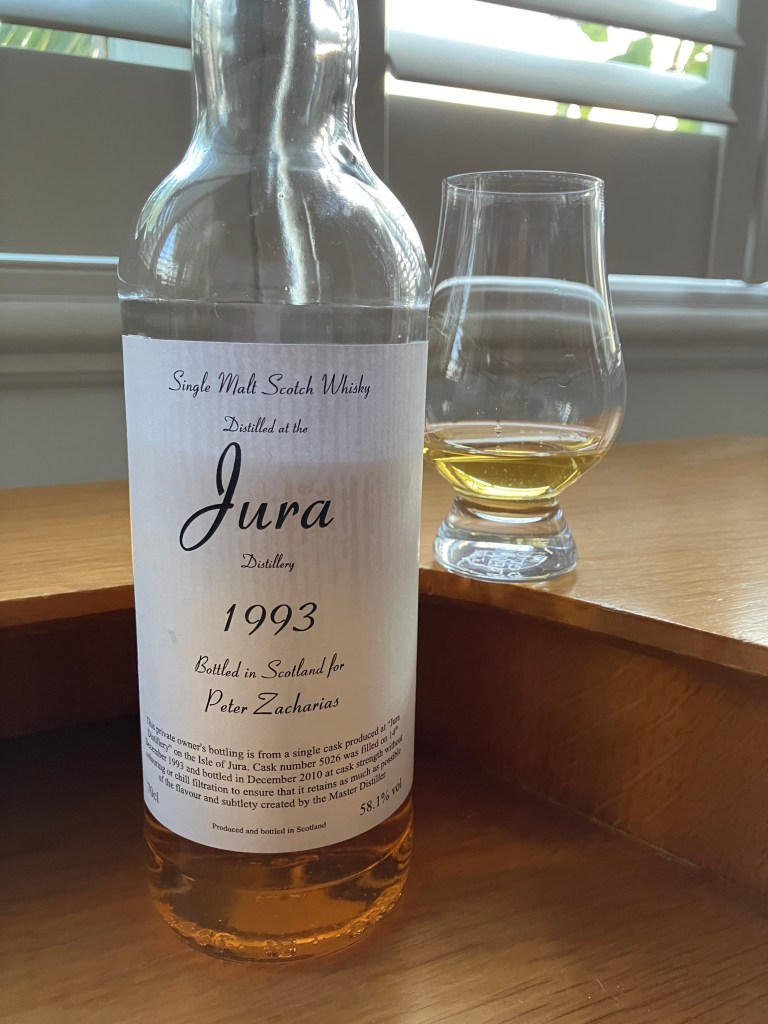
Jura private cask #5026 (17-year-old, distilled 1993, 58.1%)
Rating: 87 points
Nose: A little punchy, but well-behaved for this strength. Super tart fruits: sour green apple skins and lemons. Generally following a narrow, blending malt profile, with some alcohol showing because of that.
I do feel that just like last week’s excellent Scapa, there’s a lot more to this Jura than your typical blend filler. There’s a soft element of yeasty waxiness – how West Coast! Lots of citrus peel, mint, tarragon, rosemary. It’s beautifully fresh, vibrant and cutting. Gently spicy and floral, like a white rose.
Palate: Light but beautifully waxy. Really nice. The fruit are sour enough to make you salivate in the mid-palate. Honey, lemons and malt coat the palate beautifully. Fresh herbs again with mint, and a pure method backbone. Sour marijuana, lemon peel and white pepper on the finish.
Conclusion: Thank you Peter Z, who ever you are. What an excellent cask of Jura. I think the cut’s pretty high, there’s a lively sharpness to the front end with a nice dose of yeasty congeners, I can absolutely see how it would do well under extended maturation. The term blend-filler does not do it justice. I’m sure Jura’s negative reputation doesn’t stem from this – not sure how anyone could object to the style.
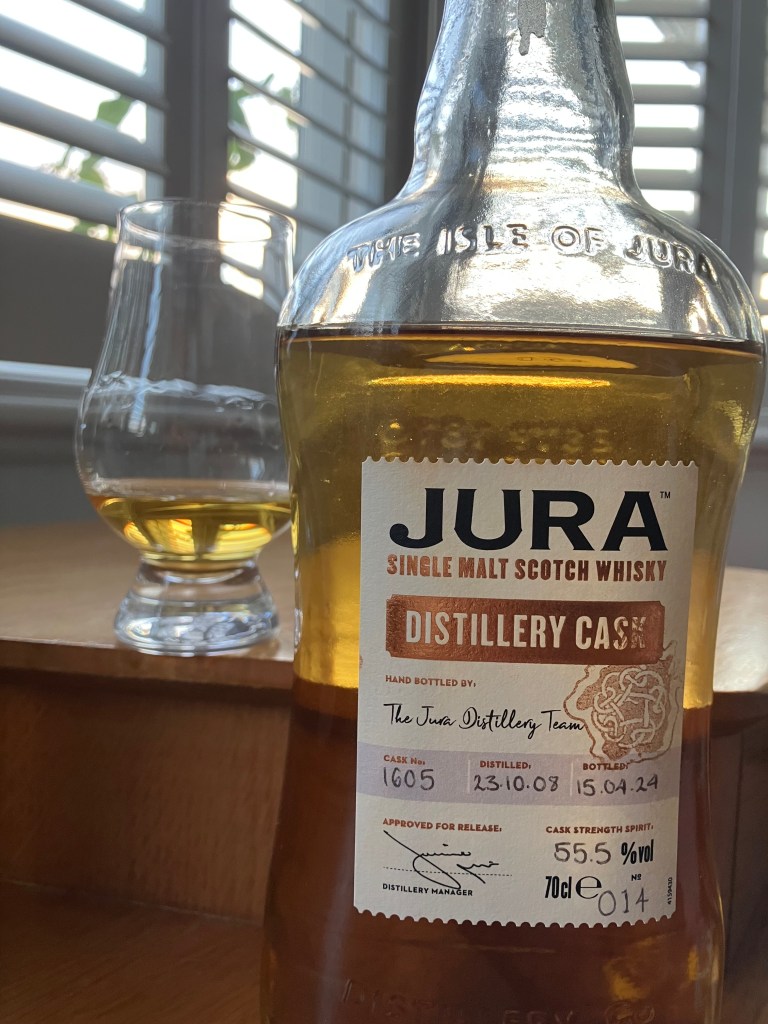
Jura cask #1605 for Feis Ile 2022 (15-year-old, distilled 2008, 55.5%)
Rating: 88 points
Nose: No sharpness at all, it’s clear the front cut has been brought way down. Much wider and weightier as well, oilier, much more “Highland”. Little of the fruitiness remains at first sight, spice seems to have taken over. It’s interesting, the cool metholated spice that runs subtly through the 1993 takes centre stage here. Eucalyptus, cardamom, still rosemary perhaps. Something a bit dry and dusty – not quite cumin, but not far off. That aspect can be challenging – I was quite put off when first opening the bottle. However, tasting these side-by-side, I’m really loving the increased texture here. The cask works wonders with the oily spirit, creating elegant musky and exotic wood impressions.
With time in the glass, the shared signature of the two distillates becomes more obvious. The green and yellow fruits are still here, but they’re loss prominent, as there’s just more of everything else. The malt impressions in the 2008 are incredibly rich, with seeded crackers, toffee, nougat, hazelnut and sunflower oil. Luxurious.
Palate: Soft, tallow-like, beautifully oily mouthfeel. Fruitier than the nose as well, with mango, sea buckthorn oil and baked apples. Lots and lots of malt in the mid-palate, alongside cherry cough pastilles and menthol. Great integration of flavour and texture, it’s a weirdo distillate, but everything’s in its place here – an excellent cask choice by the team. Finishes surprisingly fruity and fresh, with marmalade, lots of pepper and clove, quite dirty and oily for a moment, a bit of wet dog. Quite hot here, but I’m enjoying it.
Conclusion: I wasn’t particularly impressed when I first opened the bottle, the weirdly savoury-spicy nature of the distillate takes some getting used to. We can be pretty certain Jura’s divisive reputation comes from here.
However, tasting these two vintages one after the other, I have no doubt the Whyte and Mackay team made the right choice with their production changes. The texture and the cleanness of the spirit are flabbergasting. If you have to get your head around some less than ordinary flavours, so be it.
What’s nice is that there remains a shared spirit signature between the Invergordon and W&M eras. The same sour fruit and the weird spices are present in both, and while the ratios may be different, it’s still Jura.

 North Sea Whisky
Leave a comment