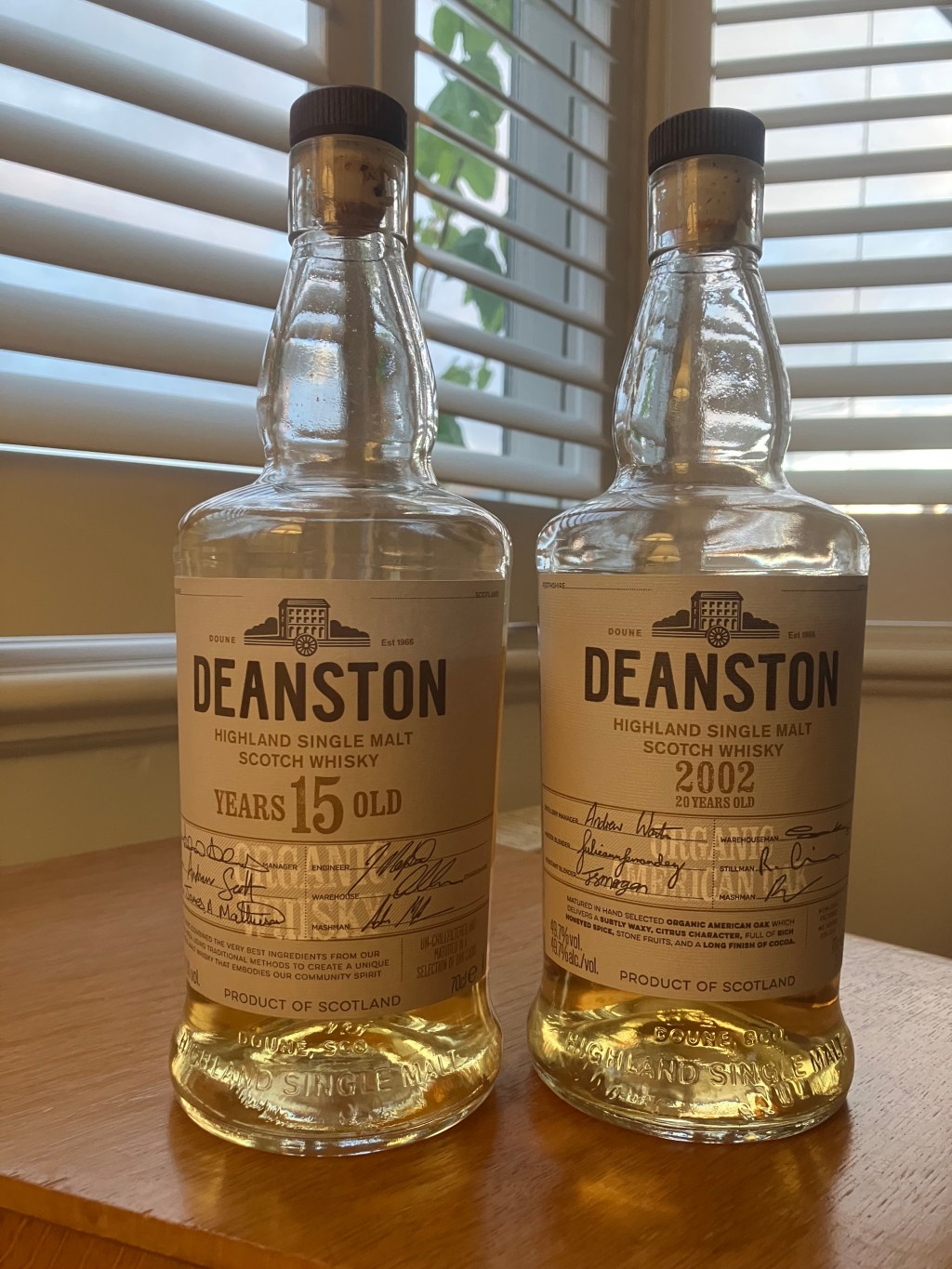
I haven’t posted for whole month, as 1) I had a summer cold 2) it’s been boiling hot so I’ve been enjoying cigars and ice cold brews, and 3) the garlic that I grow to protect my hops from pests has come in. Meaning, the old palate has been blasted to bits.
Today, however, I’ve two interesting experiments with organic barley in my glass – both from the same batch of distillate from 2002. It’s a great idea, even if Deanston have matured these in re-charred and virgin oak casks to keep them fully “organic”. Why not just call it “made from Organic barley” and stick it in something normal?
Anyway, it’s definitely got a character of its own, with a good level of grain complexity and ripe orchard fruit. I much prefer the 15-year-old, which is so close to the distillate you’d never expect cask wizardry. I’m not sure if it’s a coincidence, but this bottling only has the distillery staff’s signatures on it, whereas the older and more expensive version gives priority to the master and assistant blenders.
This particular Distell/CVH blending team follows the modern trend of pumping out cask finishes wherever they go – which, I’m sure, the boardroom happily recognises as product innovation.
What I’m saying is – the premium barley is the event here and they should lean into it more. Deanston brewed from Plumage Archer or Maris Otter would be right in line with the house style, just much, much more.
Deanston 15-year-old Organic
Rating: 89 points
Nose: Gorgeous. Mature, grain-forward with beautifully textured aromas, fruity. Whatever casks these are, they were complimentary to the spirit. That signature ozonic freshness that Deanston has, with peaches, citrus fruits, white grapes and white florals.
It’s complex, elegant and well-integrated. A dark yeasty waxiness makes it feel old-school. Water makes it fresher and zestier, with the lemon notes becoming more prominent. There are earthy herbal aspects, though it lacks the grassiness of standard Deanston: nettle, aged hops, dried lavender.
Palate: Medium weight and properly waxy. A superb three-dimensional grain experience on the tongue. It shifts between mineralic, savoury, biscuity and sour aspects of barley, supported by spicy fusel oils which have been tamed just enough by the 15 years in cask. Long and structured, it turns fruitier in the development. White grapes and peaches again, also some sweet white grapefruit with the pith. A surge of spring blossoms followed by dry herbal and mineral notes. Stays true to its Highland style.
Finishes dry and surprisingly long, with fusely grain, waxy and mineral aspects. Sour graininess with a hint of fresh fruit, followed by a bone-dry herbal-mineral complex. Excellent.
Conclusion: I have had some great Deanstons, but this might well be the best. A brilliant make well matured. Forget all these bottlings with four different types of wine cask in them, and distillate from the blend-filler days – they’re just master blender busywork. Modern Deanston is head and shoulders above that, with a style that harkens back to the halcyon days of Scotch whisky. It feels more “old school” than “modern craft”.
Deanson is right on Bruichladdich’s heels when it comes to making a complex, grain-forward spirit. Scores a 90 on a good day.
Deanston 20-year-old Organic (2002)
Rating: 87 points
Nose: Surprisingly, this is hotter than the 15, yet with an obvious roundness from the higher age. Very bourbony. Fresh yet ripe stone fruit, apricots this time, and the citrus fruits are still alive. Fresh linen, blossoms, some honey as well. More condensed, but also less defined. Feels narrower, the cask has more of a say here. Some menthol from the wood. Has its moments of elegance. Not bad, despite not being at its peak.
Palate: The same story again – it’s thicker on the palate, yet smaller and narrower. Nice oily texture. Most of the flavour comes from the wood, and there’s some tannic spice here as well, whereas the 15 seemed to get most of its punch from the spirit.
Menthol, barley, honey and polished oak. There is a freshness to it, in line with the house style – orchard fruit, spring blossoms, hints of citrus. Warm pastries, ripe apricots and peaches. A nice sourness develops with air. Some heat and grip from the wood, with a tingle of dryness that starts after a couple of seconds.
Conclusion: The hope with extended maturation is that it lifts the enriches the spirit and highlights its character. That is not the case here. Sometimes the cask contributes its flavour faster than oxidation can marry, muting the spirit.
It smells mature, obviously, but instead of complexity there’s narrowness and simplicity. They caught this one right on the line, and it’s by no means plank juice.Who knows, perhaps it would have bloomed again in a couple of years? Maturation is a weird thing. We’re not experiencing the liquid at its best here, but there are no obvious faults.


Leave a Reply